Seconda linea di resistenza della Valtellina (1915-1918)
The Valtellina Second Defensive Line
Zweite Verteidigungslinie des Veltlins
Defensive works on the left bank of the River Adda
As the historic map shows, sketch no. 4 attached to the “Monograph describing the Grosio line of resistance” depicts an area containing a wide variety of military structures: fortified trenches, covered and open communication trenches, a first-aid station, an officers’ room, cave shelters, two large troop shelters, a latrine, and a considerable amount of barbed wire that has survived.
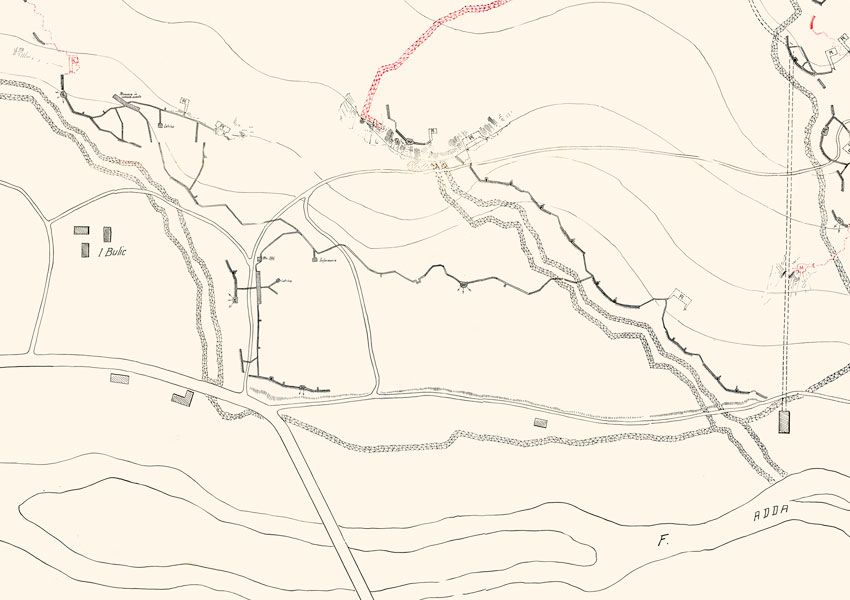
The Casale Lago area and its military structures, shown in sketch no. 4 attached to the “Monograph describing the Grosio line of resistance”*
This whole area, and especially the “Sas Alvior” area, where the armoured machine-gun emplacement displayed in the information panel is located, is one of the most interesting places in Valtellina from a military-historical perspective. In the book “Grosio and the Great War”, the author recalls a visit by members of the Kobarid Museum (Museum of Caporetto), who described this easily accessible area as “a real treasure, undoubtedly worth turning into a military history park”.
The area was heavily fortified because it guarded the Grosio bridge, locally known as Ponte dell’Impresario. This was a strategically important point, as it was the only place where the Austro-Hungarian army could cross in force. If necessary, the bridge could be demolished by attaching explosives (gelignite stored in the Grosio powder magazine) to its iron components.
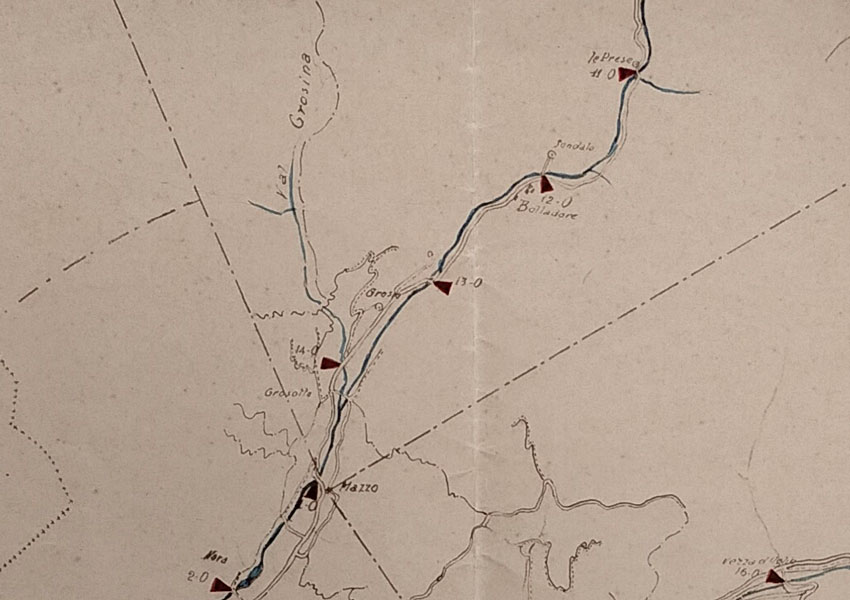
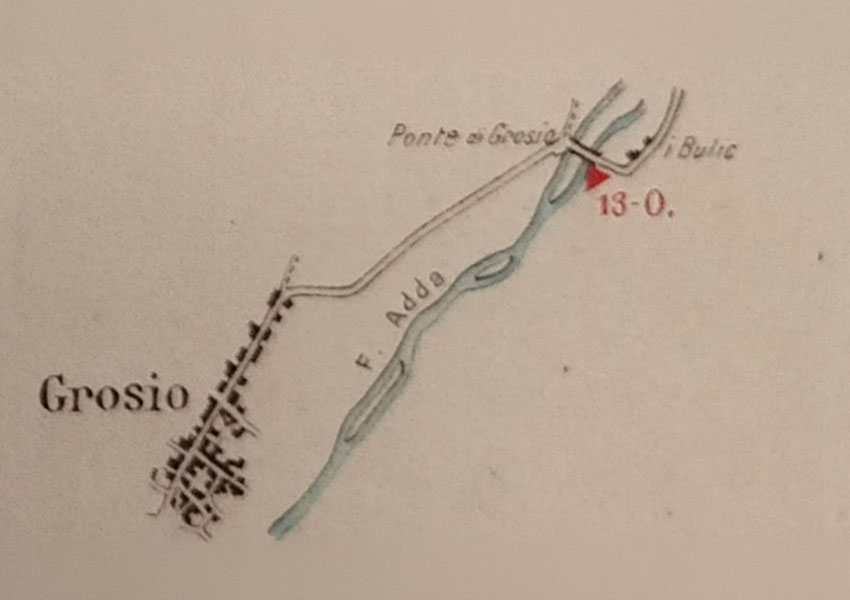
Plans for the roadblocks planned near the Casale Lago bridge
Two important water channels supplying energy to the power stations owned by the Municipality of Milan also ran through this area: the Grosotto plant, built in 1913–14, and the older Grosio plant, which is still visible and was under construction at the time. Because its pipeline and building stood close to the defensive line, the Municipality of Milan was required to limit the building’s height, camouflage the pipeline and channel, and follow various other construction requirements. Both power-station channels were protected by nearby military structures. The Grosotto channel, partly covered and partly running through a tunnel wide enough to walk through, could also be used as a communication route.
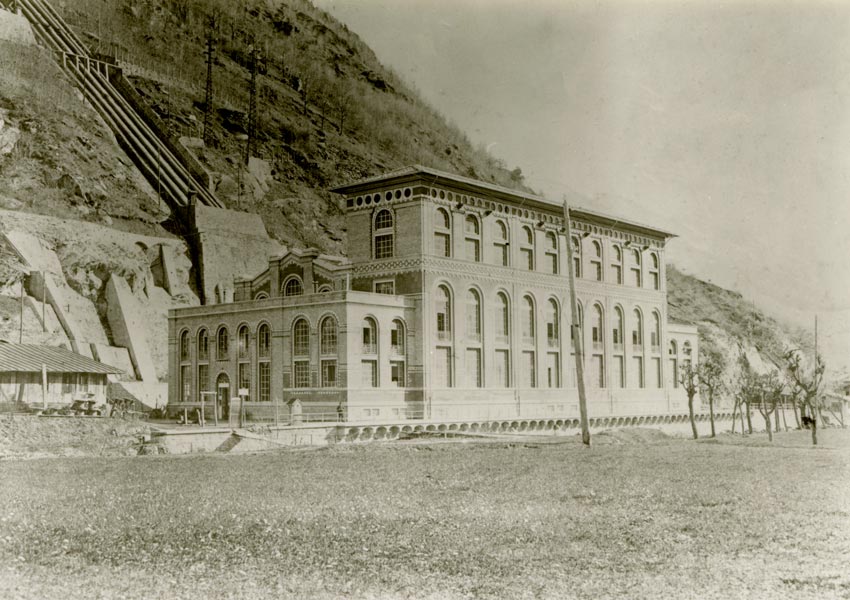
The Grosotto hydroelectric power station during the Great War**
The Fronti Dimenticati Association is working to enhance the area, with the aim of creating an educational and memorial site dedicated to the First World War in the future. It is continuing its research, inventory, clean-up, and recovery of the many military structures in the area.
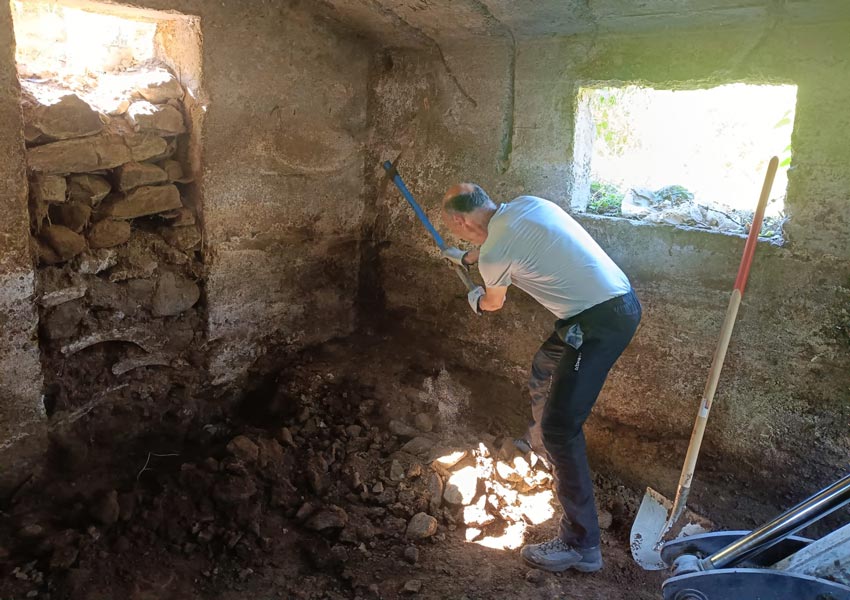
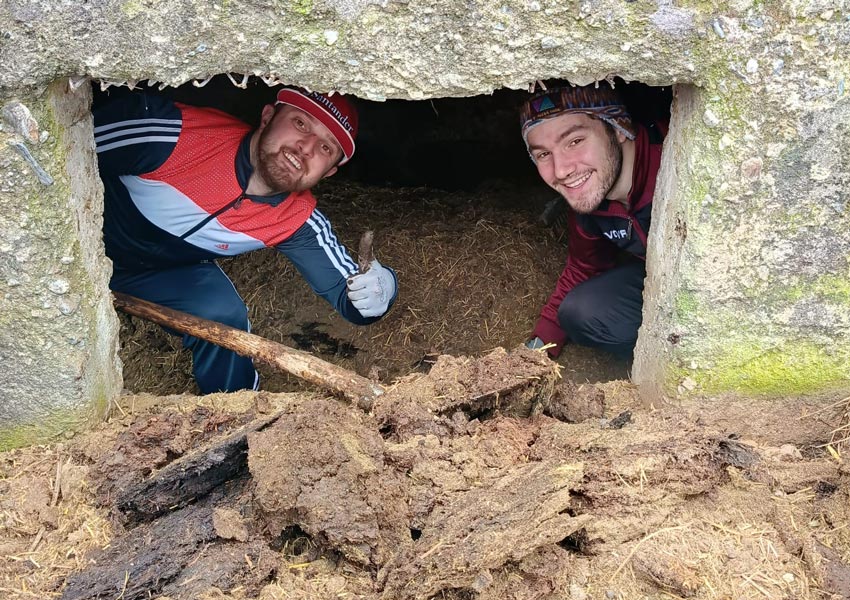
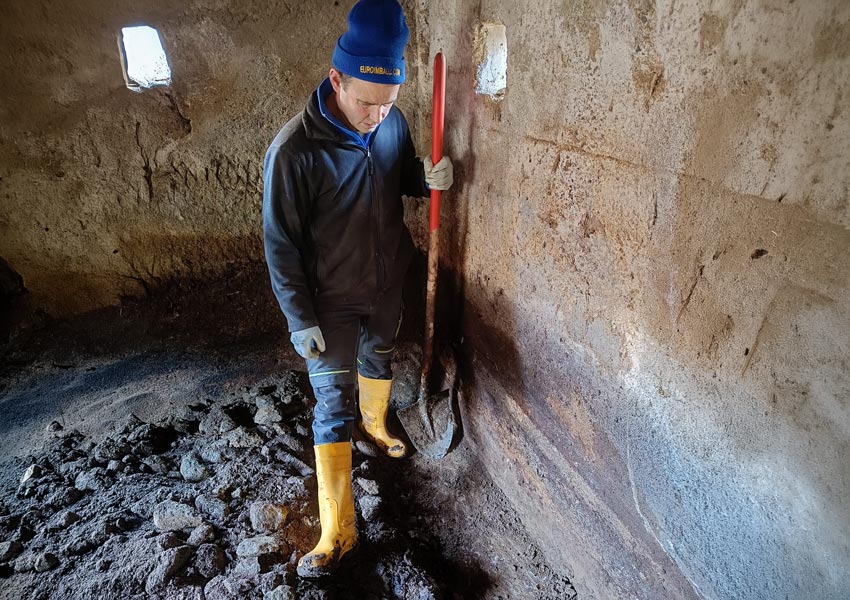
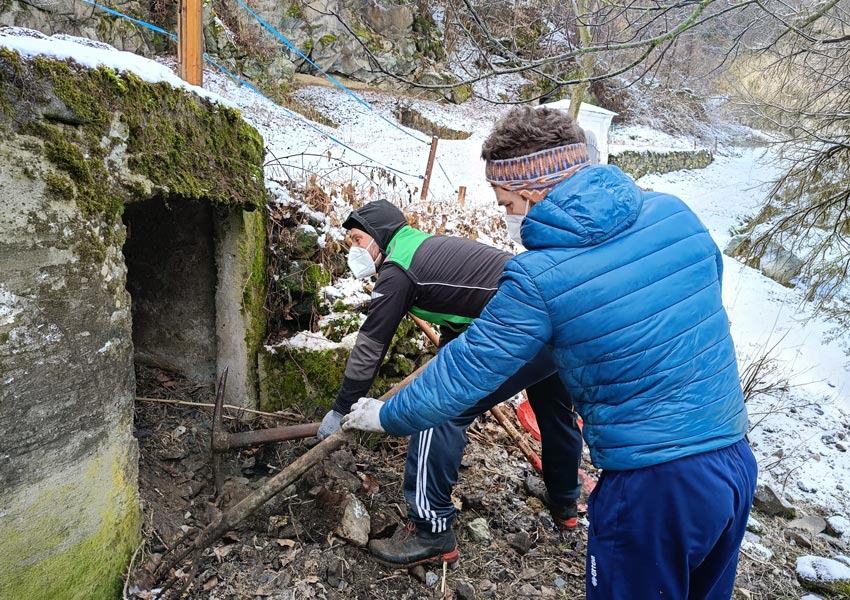
Clearing an armoured machine-gun emplacement in winter 2026
Explore the field surveys in this area
*Source: ISCAG. Licence no. 8/2026. Redistribution or publication without authorisation is prohibited.
**Source: Stefano Zazzi Archive

With support from


With support from

Initiative sponsored and supported by the Province of Sondrio