Seconda linea di resistenza della Valtellina (1915-1918)
The Valtellina Second Defensive Line
Zweite Verteidigungslinie des Veltlins

San Giorgio: preserved beauty
The Church of San Giorgio lies at the heart of Grosio’s historical identity, having retained its late fifteenth-century appearance almost intact. During the war, however, its beauty was seriously threatened. A line of resistance to be held at all costs had been established close to the historic centre; any fighting would have brought death and devastation. Fortunately, armed confrontation was avoided, but we can imagine what might have happened…
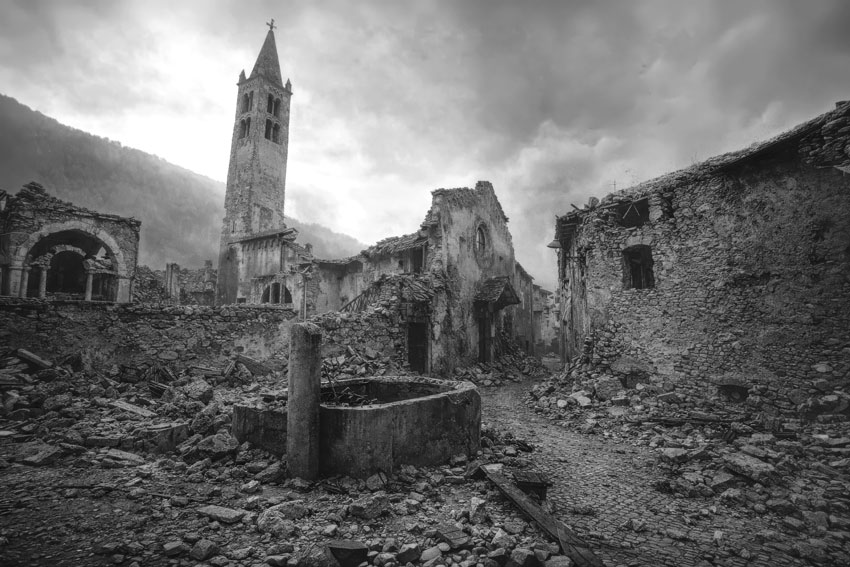
What might have happened…*
The church’s beauty has survived thanks to the many young men and older soldiers—including many from Grosio—who fought and lost their lives to slow and prevent the Austro-Hungarian advance on the Isonzo front, thereby easing pressure on the Stelvio front. In 1915, Grosio’s parish priest also left after being called up as a chaplain, an event reported in the newspapers of the time.** Priests, too, were mobilised and carried out their duties while braving the dangers of war and harsh weather. A curious anecdote recounted by Commander Alfredo Fiocca illustrates this: at Christmas 1916, while he was on the peaks of the Upper Valtellina at an altitude of 3,000 metres, the battalion chaplain braved a blizzard to join him and celebrate Holy Mass. Fiocca jokingly addressed him not as “reverendo” (reverend), but as “beverendo”, a pun on the Italian verb “bere” (to drink). This term was used in Alpini slang to refer humorously to the habit of drinking plenty of wine at high altitude—and elsewhere.***
Some fine period photographs of the chaplain Father Guglielmetti have also survived, taken both in the village of Grosio and in Val Grosina.

The chaplain Father Guglielmetti****
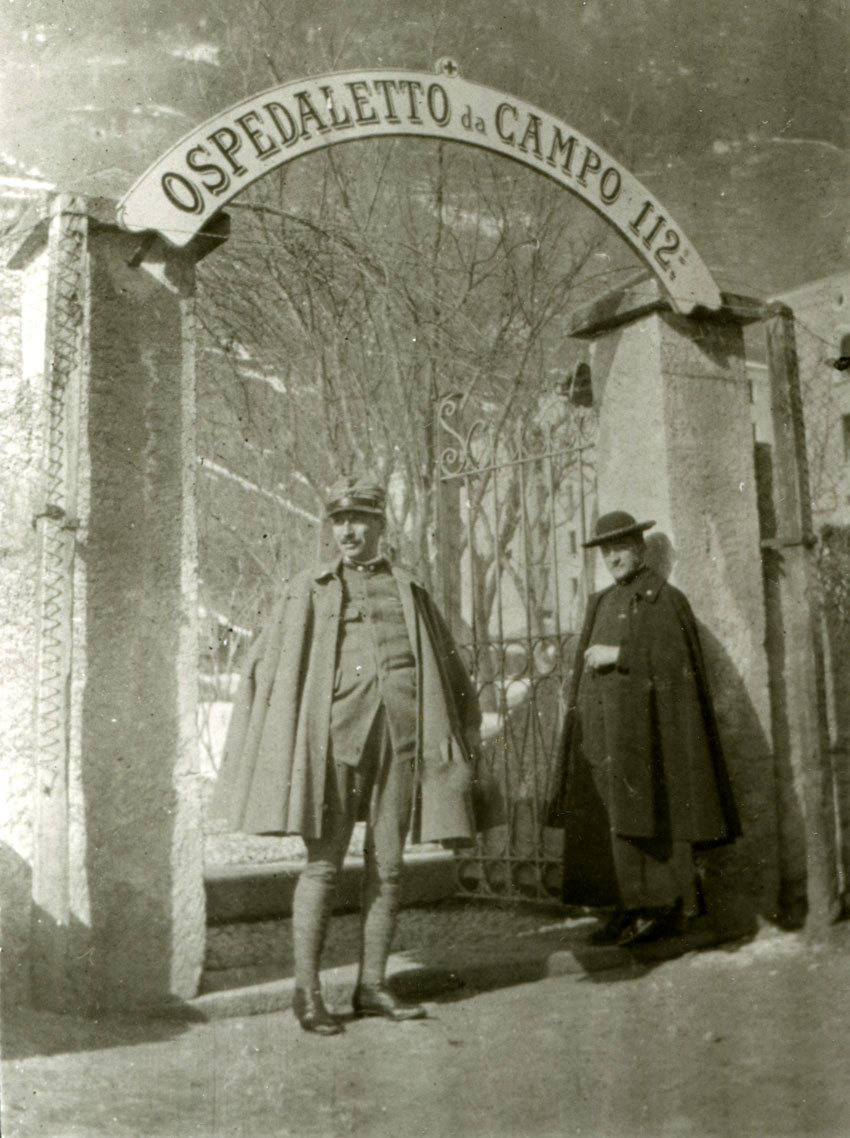
The army surgeon Dr Bruneri and the chaplain Father Guglielmetti – 20 February 1917****

Father Guglielmetti with a group of soldiers****

Mass celebrated by the chaplain Father Guglielmetti at Grosio cemetery – 2 November 1917****
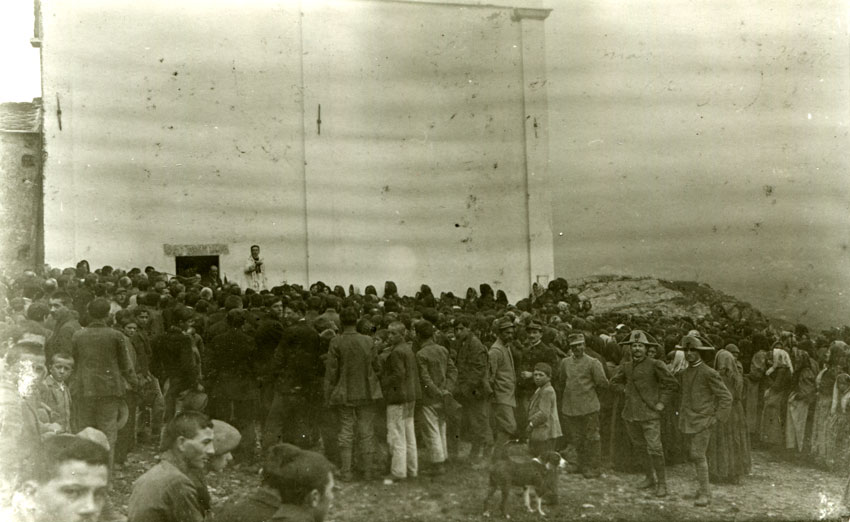
Malghera – Mass celebrated by the chaplain Father Guglielmetti on the Feast of Our Lady of the Snows – 15 August 1916****
As Grosio served as a rear area for the front for four years, many of its buildings were repurposed for military use. The Church of San Giorgio, which had long been abandoned, was turned into a storehouse. To protect them from bombardment, many works of art were taken away to safe locations. These included works by Cipriano Valorsa of Grosio, the most important Valtellina painter of the sixteenth century. Nello Tarchiani, who was entrusted by the Ministry with the return of artworks in Lombardy, recalled that these works deserved protection just as much as the most highly prized masterpieces: their loss would have been truly irreparable, since they were an integral part of the very essence of local identity.
On the inner entrance wall of the Church of San Giorgio is a fresco depicting the Deposition from the Cross. According to tradition, it includes a presumed self-portrait of Valorsa dressed as a humble craftsman. His house also survives in Grosio, on the street named after him, where a beautiful fresco with an unusual history can be admired.
A visit to both is highly recommended!
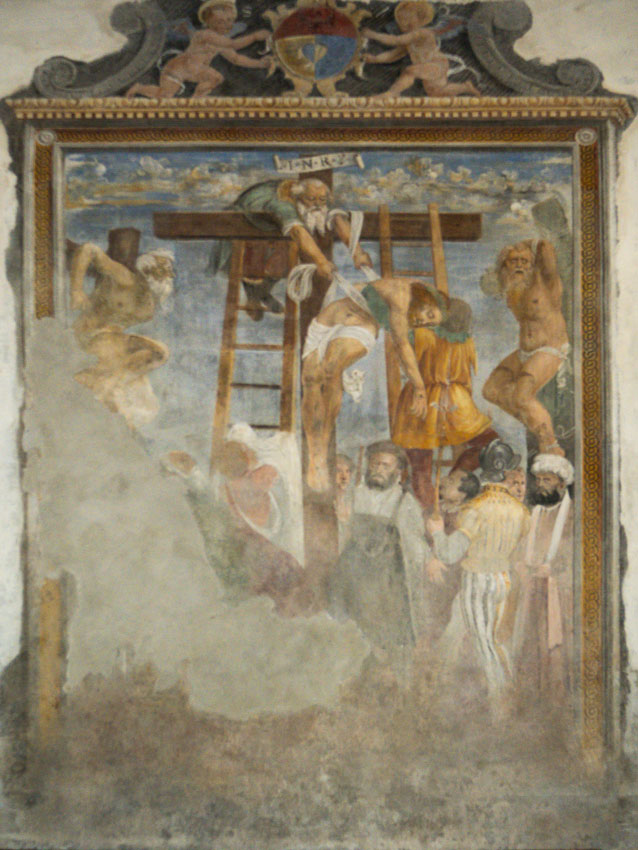
San Giorgio – Deposition from the Cross, a fresco by Cipriano Valorsa
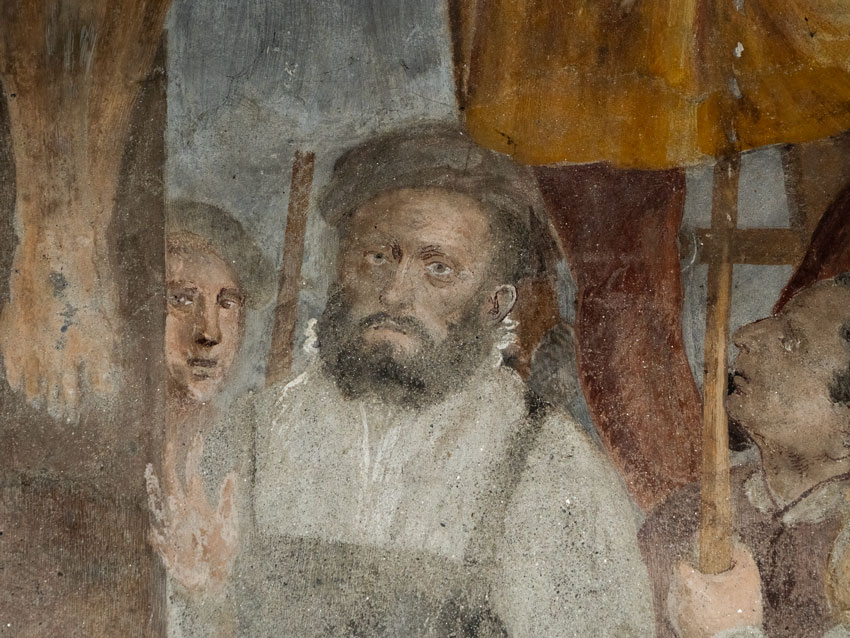
San Giorgio – Presumed self-portrait of Cipriano Valorsa
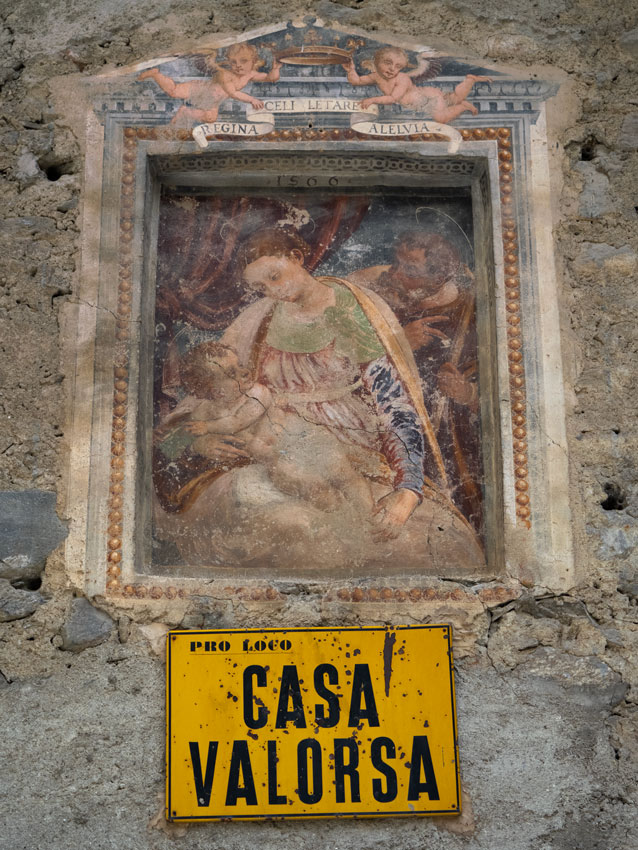
The fresco on the façade of Casa Valorsa
* Source: Digital image created using generative AI (ChatGPT/OpenAI, 2025).
** Source: Rodigari, M. (2026), I sogni del soldato [The Soldier’s Dreams].
*** Source: Canetta, E., Canetta, N. (2004), Grosio e la Grande Guerra [Grosio and the Great War].
**** Source: Stefano Zazzi Archive

With support from


With support from

Initiative under the patronage of and supported by the Province of Sondrio