Seconda linea di resistenza della Valtellina (1915-1918)
The Valtellina Second Defensive Line
Zweite Verteidigungslinie des Veltlins

The rear-area support system: the Gilardi bakery
INCOMING
Starting tomorrow, bread is to be collected from the bakery of Gilardi G. Battista in Grosio, against the issue of the regular bread vouchers, as before.
Please send confirmation.
Capt. Bonetti
OUTGOING
In reply to the telegram concerning the collection of bread from the bakery of Gilardi G. Battista in Grosio, we confirm that the request will be fulfilled.
signed, Lt. Nobile
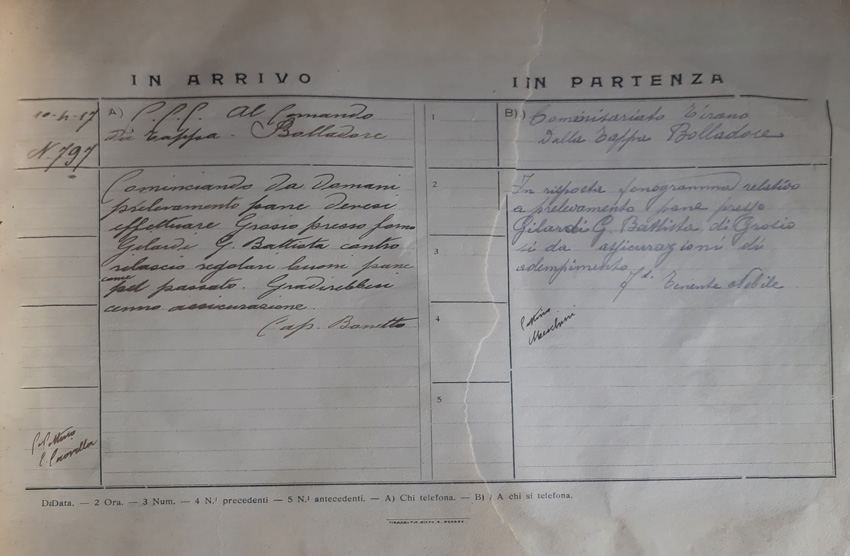
The historical document**
This document records the collection of bread from the Gilardi bakery in Grosio. Bread was an essential part of the troops’ diet, but it had other uses too: during a chemical attack it could be dampened and wrapped in a handkerchief to cover the airways. It could also be bartered with the enemy in exchange for tobacco.
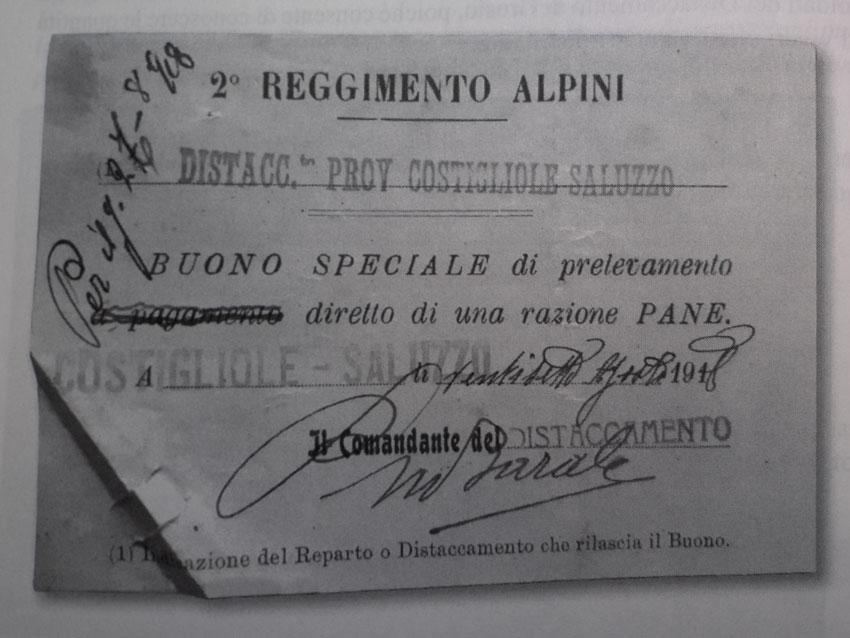
Special voucher for the direct collection of one bread ration***
Because it spoiled quickly, bread was replaced by long-lasting hardtack. As supply difficulties increased, the Italian Government set the types of flour to be used.
The second image shows an interesting document listing the food rations distributed to soldiers: 200 g of meat, eaten fresh or canned (one tin per ration), 150 g of rice and 100 g of potatoes (350 g in 1915, later reduced), as well as cheese. Despite the many livestock farms in the mountains, cheese was not often included in the soldiers’ meals.
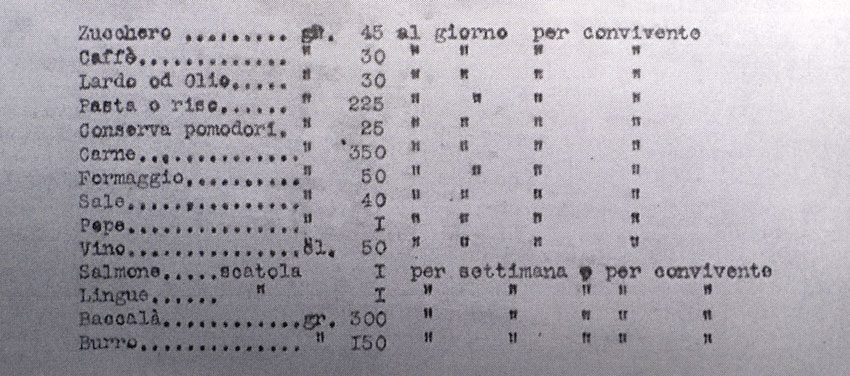
Goods available for purchase at the Grosio depot****
Depots in Bormio, Grosio and Tirano supplied official messes with various products in set quantities and at prices established by the Quartermaster authorities. The mess officer signed the requisition and was responsible for declaring both the number of people dining at the mess and whether their ration was received in kind or in cash.
Among the goods available were salt cod, served as an alternative to meat, and wine. Wine was considered essential because it encouraged social interaction, eased fears and soothed homesickness. If it was unavailable at the depots, it could be purchased from local traders in the quantity needed for the day.
Despite strict rules of conduct and the precautions in place, soldiers sometimes drank too much wine, as happened to one soldier admitted to the hospital in Grosio.*
To hear his amusing story, continue to the next stop on the route and scan the QR code!
* Text adapted from Rodigari, M., Dreams of a Soldier (2026), pp. 19–84, “Food and Rations”.
** Source: Bolladore Garrison collection, Leandro Togni collection. Photograph courtesy of Marco Rodigari.
*** Source: Rodigari, M. (2026), Dreams of a Soldier: Life and Logistics of the White War between Tirano and the Peaks of Upper Valtellina, p. 28. Bormio: Alpinia Editore.
**** Source: Rodigari, M. (2026), Dreams of a Soldier: Life and Logistics of the White War between Tirano and the Peaks of Upper Valtellina, p. 80. Bormio: Alpinia Editore.

Con il contributo di


Con il contributo di

Iniziativa patrocinata e sostenuta dalla Provincia di Sondrio